Mathmos Lamp Models Reference
Mathmos: The Company Behind the Lamp
Mathmos is the original manufacturer of the lava lamp, trading under that name since 1992 but tracing its lineage directly to Crestworth, the company founded by inventor Edward Craven Walker in the 1960s. That continuity matters for restoration purposes, because it means Mathmos lamps span a remarkably wide range of eras, construction methods, and fluid chemistries — and what works for one generation won’t necessarily work for another. Knowing which model you have is genuinely the first step toward understanding what you’re dealing with.
The Core Models and What Sets Them Apart
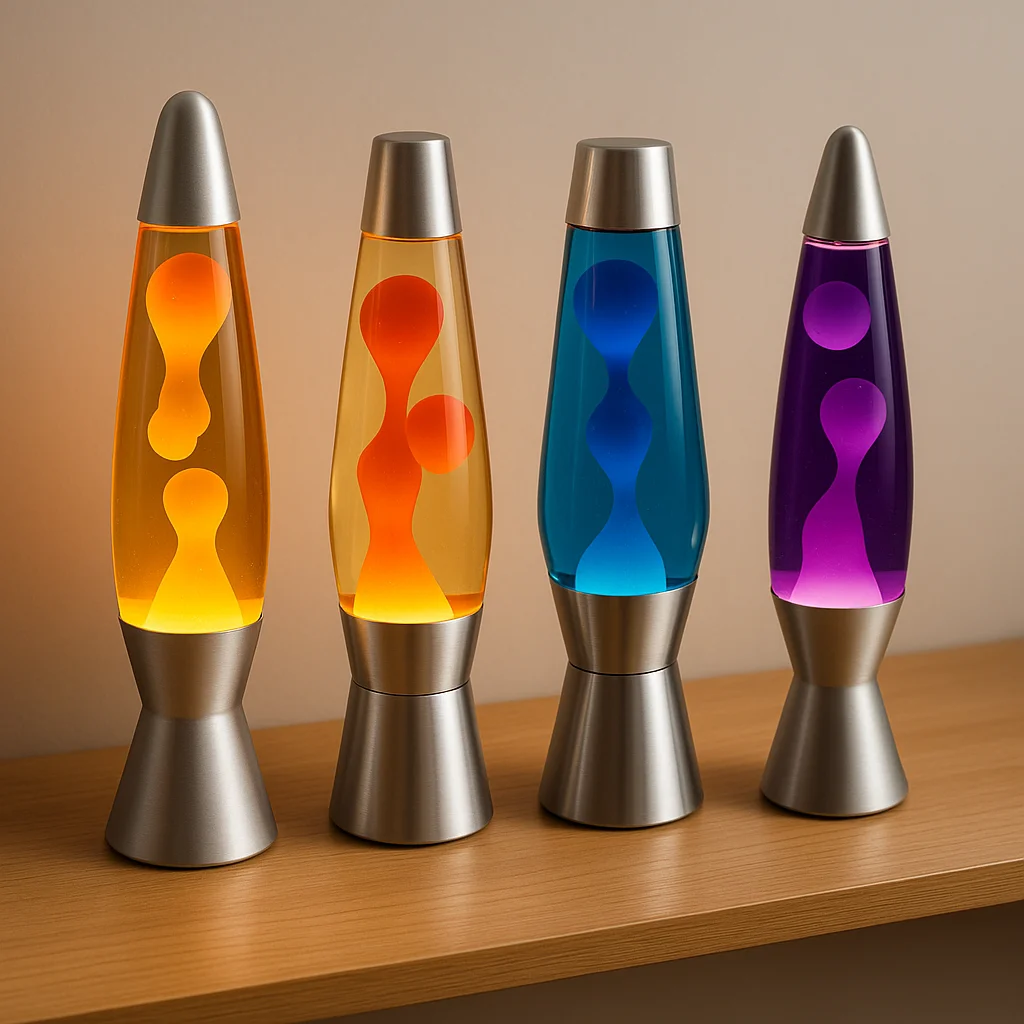
Astro is the flagship — the teardrop-shaped classic that most people picture when they imagine a lava lamp. It has been in continuous production in various iterations since the Crestworth era, which means there are Astro lamps out there from the 1970s, the 1980s, the 1990s, and the 2000s onwards, all wearing broadly similar silhouettes but with meaningfully different internals. Early examples used a different wax formulation and a larger, coiled wire spring at the base; later versions moved to a smaller coil or a disc. The distinction matters because the spring or disc acts as a heat distributor, and damage or corrosion here is a common failure point in older units.
Astro Baby is the smaller sibling — same principle, scaled down. Because the fluid volume is lower, temperature sensitivity is more pronounced, meaning these lamps are less forgiving of slightly incorrect bulb wattages.
Giant (sometimes listed as Astro Giant) is exactly what it sounds like: an oversized version intended as a statement piece. The larger fluid volume makes it slower to reach operating temperature and more susceptible to cloudiness developing over time, simply because there’s more fluid for contaminants to accumulate in.
Telstar is the spherical model, and it’s a different proposition entirely for restoration. The round globe format means heat distribution behaves differently, and the wax compound used in Telstar units has its own characteristics. If you’ve acquired a non-working Telstar, the failure mode guide is worth reading carefully before you proceed.
Neo and Lunar represent Mathmos’s more modern design departures — squarer, more architectural silhouettes that were sold heavily in the 2000s. These tend to have more standardised components and are often easier to source replacement parts for, though their fluid chemistry is broadly similar to contemporary Astro units.
Era-Based Restoration Considerations
The rough rule of thumb is this: the older the lamp, the more chemically degraded the fluid is likely to be, and the more likely you are to encounter wax that has permanently separated or emulsified. Lamps from the 1990s and earlier are beautiful objects, but they frequently need complete fluid replacement rather than restoration. Our fluid restoration guide explains when restoration is viable and when disposal is the only responsible path forward.
Lamps manufactured from roughly 2000 onwards are generally more recoverable. The fluid compounds used in this period are better documented, and the wax behaviour tends to be more predictable after a thorough cleaning of the globe.
Regardless of era, the lamp’s globe seal is one of the first things to check. A compromised seal allows evaporation of the volatile components in the fluid, which is both a restoration problem and — given the chemicals involved — a reason to handle older lamps with care and good ventilation.
Using This Reference Alongside Other Guides
This page is intended as a starting point for orientation, not a complete technical manual. Once you’ve identified your model and era, the diagnosis guide will walk you through the specific checks that make sense for your lamp, and the component substitution guide covers what to do when original parts simply aren’t available. Between them, these pages cover the full picture of what a Mathmos restoration realistically involves.