About Lava Lamp Revival
Why This Site Exists
Every year, thousands of lava lamps get thrown away. Not because they’re beyond saving — but because their owners didn’t know where to start, assumed the worst, and gave up. A lamp that sits motionless, filled with grey cloudy fluid and a waxy lump that refuses to move, looks dead. It isn’t always. And that distinction matters enormously, both for the lamp and for the landfill it would otherwise end up in.
Lava Lamp Revival started from a straightforward frustration: there was no single, honest resource for people who’d picked up a non-working Mathmos lamp at a car boot sale or inherited one from a loft clear-out and genuinely wanted to understand what they were dealing with. Could this be fixed? Was the fluid salvageable, or hazardous, or both? What had actually gone wrong? The internet offered fragments — forum posts from 2009, contradictory advice, a lot of confident misinformation. This site is an attempt to do better.
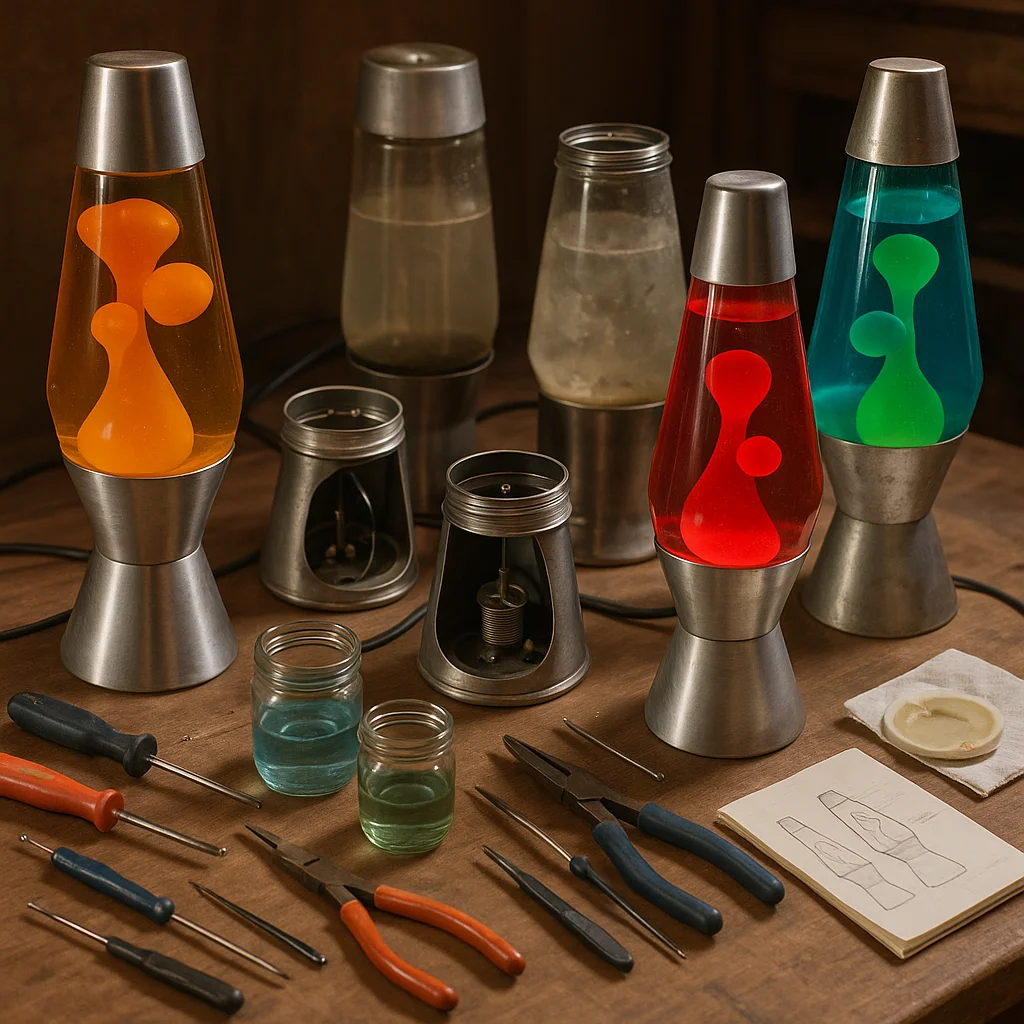
The Mathmos Focus
Mathmos holds a particular place in this story. As the original manufacturer of the lava lamp — Crestworth, the company that became Mathmos, invented the design in the 1960s — their lamps have a specific construction, a specific set of failure modes, and, crucially, a devoted following of people who want them to keep working for decades rather than months. A Mathmos lamp isn’t disposable. Many of them were built to last, and with the right knowledge, many of them still can.
That’s not to say every Mathmos lamp is rescuable. Some genuinely aren’t. One of the most useful things this site tries to do is tell you that honestly, before you invest hours of effort into something that can’t be salvaged. The Failure Mode Guide exists precisely for that reason — to help you triage what you’ve got. A cracked globe is a different problem from degraded wax. A burnt-out bulb is nothing like a chemically contaminated fluid that’s past restoring.
A Salvage-First Philosophy
The environmental angle here isn’t incidental — it’s the whole point. The fluid compounds inside lava lamps aren’t something you want poured down a drain or dropped in a household bin. They need handling with a bit of care. At the same time, the instinct to simply discard a lamp because it looks wrong bypasses a whole tier of intervention that’s often simpler than people expect. Restoration, where possible, is genuinely the better outcome: for the object, for the material that went into making it, and for the resources that would be consumed producing a replacement.
Where original components can’t be sourced, this site covers substitution with accessible modern materials — always with an eye on what actually works rather than what sounds plausible in theory. The component substitution guide is honest about what modern alternatives can and can’t replicate. And for fluid that genuinely cannot be restored, the responsible disposal guide covers how to handle it without causing harm.
Who This Is For
If you’re an experienced chemist or a professional restorer, you may find some of this foundational. That’s fine — it’s not written for you. It’s written for the person who picked up a vintage Astro lamp for a few pounds because it looked interesting, has no particular technical background, and wants a clear-eyed explanation of what they’re looking at and what their options are.
No guesswork dressed up as expertise. No advice that quietly assumes you have specialist equipment. Just careful, researched guidance on a niche that deserves to be taken seriously.
If you’re just getting started, the diagnosis guide is a sensible first stop — it’ll help you work out what you actually have before deciding what to do next.