Frequently Asked Questions About Lava Lamp Restoration
The Questions We Hear Most Often
If you’ve just unboxed a cloudy, sluggish, or completely lifeless Mathmos lamp, you probably have a lot of questions — and a healthy mix of hope and scepticism. That’s exactly the right place to start. Below are the most common questions that come up when people begin a restoration, answered as honestly as we can.
Is My Lamp Actually Worth Restoring?
Can a lamp that hasn’t worked in decades really be brought back?
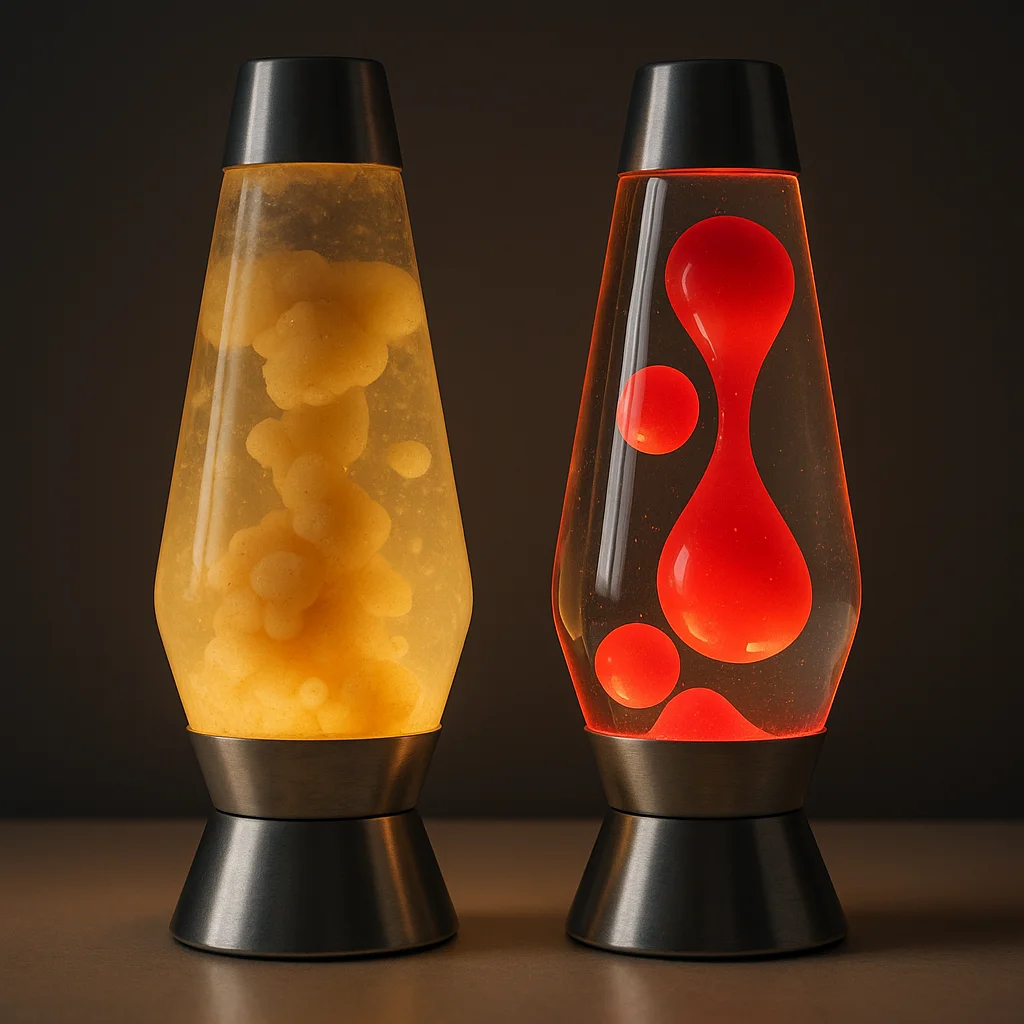
Surprisingly often, yes. The most common failure modes — cloudy fluid, wax that has separated or gone waxy-grey, a dead bulb, or a corroded bulb holder — are all recoverable with patience and the right approach. The Failure Mode Guide breaks this down in detail, but the short answer is: most lamps that look dead are not actually dead.
What makes a lamp unrecoverable?
A cracked or deeply scratched globe is the most decisive deal-breaker. The fluid chemistry depends on a sealed, intact environment, and a compromised globe can’t be safely or reliably repaired. Severe corrosion inside the base that has damaged the wiring beyond cleaning is another hard limit. Everything else is usually negotiable.
Does the age of the lamp matter?
Age itself isn’t the issue — the conditions the lamp has been stored in are what matter. A lamp kept in a warm, dark cupboard for thirty years may be in far better shape than one left on a sunny windowsill for five.
Fluid, Wax, and Material Safety
The fluid in my lamp looks grey and murky — is it toxic?
Mathmos lamp fluid is generally composed of water, a surfactant, and colourings. It isn’t acutely toxic in the way industrial chemicals are, but it should not be ingested, and you shouldn’t let it get into drains or waterways. If your fluid is beyond restoration, our responsible disposal guide explains how to handle it properly.
Can I just top up the fluid with water?
You can add distilled water to restore the level, but plain tap water can introduce minerals that accelerate cloudiness. Distilled water is the right choice here. If the fluid is already heavily degraded, topping it up won’t solve the underlying problem — the fluid restoration guide explains when it’s worth attempting a full fluid refresh.
Is the wax dangerous to handle?
The wax compound itself is not hazardous at room temperature. Avoid heating it directly or inhaling fumes from overheated wax. When in doubt, let the lamp do the heating — that’s what it’s designed for.
Bulbs, Heat, and Running the Lamp
Can I use an LED bulb in a Mathmos lamp?
This is one of the most common substitution mistakes. Lava lamps rely on heat from the bulb to melt and move the wax — LEDs produce very little heat and won’t work. You need an incandescent bulb of the correct wattage for your specific model. Our Mathmos models reference page lists the correct bulb specifications for the most common lamps.
How long should I run the lamp during restoration?
Give it at least three to four hours during initial tests. Cold wax can behave strangely at first — pooling, forming odd shapes, or refusing to rise — before the whole column reaches operating temperature. Many people give up too early, convinced the lamp is broken, when it simply needs more time.
What if the wax rises but doesn’t fall properly?
This usually points to a density mismatch between the wax and fluid. It can develop over time as fluid evaporates or degrades. Detailed guidance on diagnosing and correcting this is covered in the diagnosis guide and the component substitution guide.
Still unsure where to begin? The diagnosis guide is the best starting point for a lamp you haven’t assessed yet, and the failure mode guide will help you decide whether further effort is worthwhile before you invest too much time in a lamp that may have fundamental problems.